
 +86-18633235200
Anode tubes constitute the anode system of wet electrostatic precipitators. The fiberglass reinforced plastic (FRP) anode tubes produced by Hebei Weimei Environmental Protection Co., Ltd. boast the advantages of strong corrosion resistance, excellent electrical conductivity, high efficiency in dust and mist removal, light weight, high strength, and compact structure. The honeycomb structure enables both the inner and outer surfaces of each tube to serve as precipitation surfaces. They also feature good flame retardancy, with the oxygen index of the material reaching over 32. Their service life can be as long as 20 years.
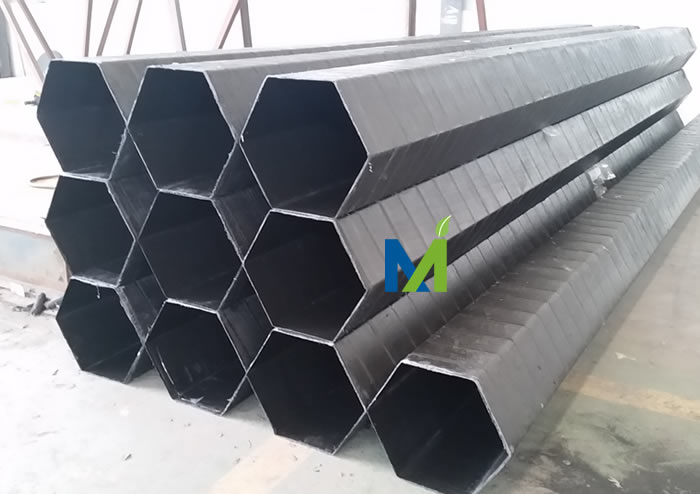
FRP Anode Tubes
Layered Structure and Fabrication of FRP Anode Tubes
The layered structure of the FRP used for conductive FRP anode tubes is, from the inside to the outside, as follows: 1 layer of carbon fiber mat, 2 layers of chopped fiber strip mats, 3 layers of glass fiber cloth with a thickness of 0.4mm, and 1 layer of glass surface mat. Vinyl resin is adopted as the base resin, which contains high-carbon-content (>98%) graphite, flame retardants and other additives. The conductive FRP made of this material has the advantages of high strength, good rigidity, excellent electrical conductivity and flame retardancy.
Characteristics of FRP Anode Tubes
- Light Weight and High Strength
The FRP anode tubes are light in weight yet high in strength, with fixed external dimensions. Unlike lead precipitation electrodes that tend to deform after long-term use, these tubes avoid such deformation issues, thereby extending the service life of the equipment. - Compact Structure
The honeycomb structure allows both the inner and outer surfaces of each tube to act as precipitation surfaces, with no dead zones in between. Therefore, for treating flue gas of the same scale, the equipment has a smaller volume and occupies less floor space. - Strong Corrosion Resistance
They can resist corrosion by various dilute acids, alkalis, salts and other media. - Good Flame Retardancy
Tested by national professional testing institutions, the oxygen index of the material can be below 28%. Thus, even if arcing occurs inside the electric field, it will not ignite the precipitation components.
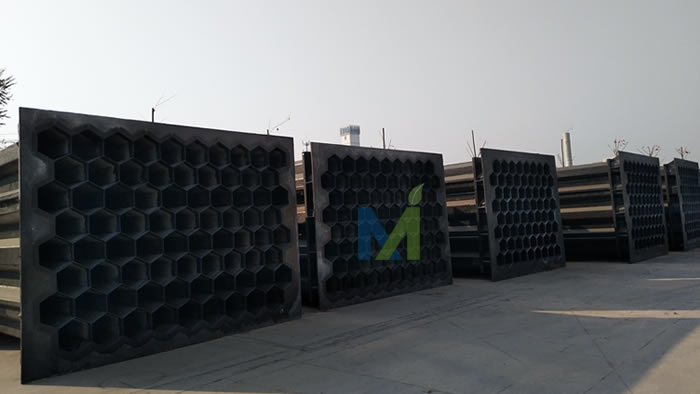
Anode System of Wet Electrostatic Precipitator