
 +86-18633235200
In the actual operation of a wet electrostatic precipitator (WESP), the cathode wires operate in a harsh working environment. If the electrode wires break, it may cause electrode short-circuiting, which in turn forces the entire electric field to shut down and lose its dust removal capability. According to the on-site gas conditions, we will select the corresponding cathode wires, among which the most commonly used ones are lead electrode wires and 2205 stainless steel cathode wires.
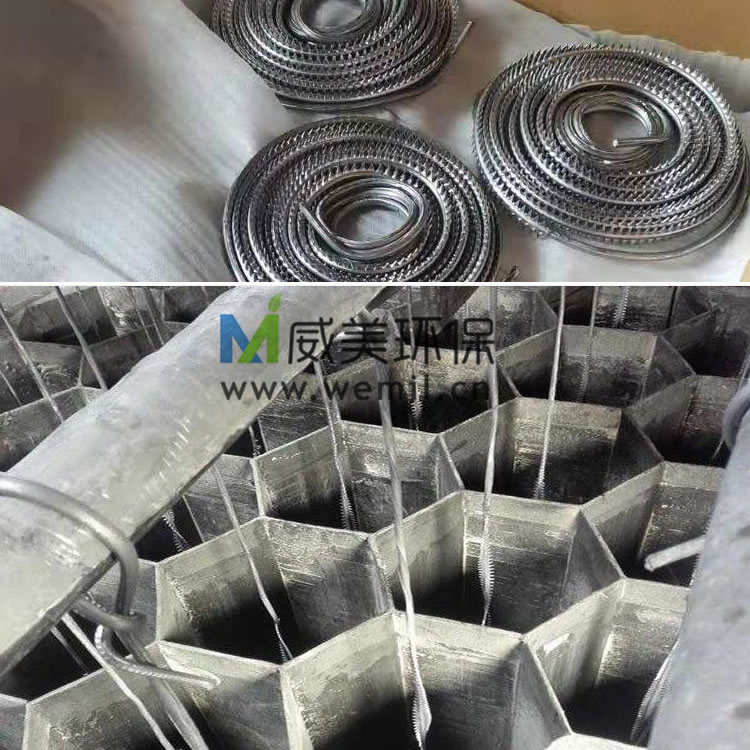
Causes and Solutions for Severe Corrosion and Fracture of Cathode Wires in Wet Electrostatic Precipitators
The following phenomena will occur when cathode wires break:
- The secondary voltage drops suddenly, and the primary voltage decreases accordingly.
- The secondary current surges beyond the limit value, and the primary current increases correspondingly.
- Electric field arcing occurs; if not detected in time, the electric field protection will trip.
Causes for Cathode Wire Fracture in Wet Electrostatic Precipitators:
- The cathode wires of the wet electrostatic demister are corroded and worn by the gas.
- Excessive rapping or intense rapping leads to metal fatigue and fracture.
- Poor installation or maintenance quality results in loosening of the fastening screws at both ends or weld joint failure.
Solutions for Cathode Wire Fracture in Wet Electrostatic Precipitators:
- Adjust the current, voltage, etc., to keep the electric field operating within the allowable range.
- If the electric field cannot maintain stable operation, withdraw it from service and conduct maintenance after boiler shutdown.
Hebei Weimei Environmental Protection Co., Ltd. is a manufacturer specializing in the design and production of wet electrostatic precipitators and flue gas desulfurization equipment. We also undertake maintenance and renovation projects for wet electrostatic precipitators and flue gas desulfurization equipment. Inquiries are welcome.